Melbourne Sports Photography: Choosing the Right Lenses
Picking lenses for sports photography in Melbourne feels less like shopping and more like outfitting for a mission. The city throws everything at you — blustery oval days at the MCG, tight indoor courts in suburban centres, twilight community matches under LED lights, and wet winters that test gear and patience. Your lens choices determine whether you capture decisive frames of motion, atmosphere, and story, or you come home with soft subjects and missed moments. This article walks through the practical decisions, trade-offs, and specific lens recommendations I rely on when shooting everything from junior footy to A-league and state-level athletics in Melbourne.
Why lens choice matters here
Sports photography is a study in constraints. You can control aperture, shutter, and ISO, but the geometry of the field, the available light, and the speed of play are fixed. In Melbourne, those constraints shift through the season. Summer nets contests under strong sunlight and long shadows. Winter brings low-angle light and more indoor fixtures. Stadiums like the MCG and AAMI Park give you distance and space; suburban ovals, school gyms, and local indoor centres force you to work close or pick glass that isolates players in tight frames.
A lens is the tool that translates those constraints into image possibilities. Focal length governs framing and compression. Maximum aperture governs low-light performance and subject isolation. Autofocus speed and focus tracking decide whether you get a crisp sequence or a pile of near-misses. Size and weight matter because you will be carrying this gear across long days. Tight trade-offs are normal: faster lenses are heavier and pricier; ultra-telephotos give tight frames but are harder to move with during changing play.
Three decisions that shape every kit
1) How far are you from the action? Shooting from the stands at a professional match requires different glass than courtside at a suburban basketball game. If you have fixed positions — a press box, the bench, or a designated sideline — you can choose longer, heavier lenses. If you move a lot, pick lighter, more versatile pieces.
2) Which moments do you prioritise? Do you photograph decisive facial expressions and facial details, or do you prefer wide, environmental shots that show bodies in motion and the crowd? A 400mm shortens the distance and isolates faces; a 70-200mm gives versatility between headshots and mid-body action; a 24-70mm captures context.
3) What light will you face? Outdoor daytime footy can tolerate smaller apertures and higher shutter speeds. Indoor netball or basketball requires bright apertures like f/2.8 or wider and bodies that can handle high ISO with minimal noise. In Melbourne, many suburban venues have poor lighting; a lens with f/1.8 or f/2 can make the difference between usable and unusable frames.
Recommended lenses for the Melbourne mix
Below are practical lens choices I return to, explained for the most common assignments local photographers handle. This list focuses on focal lengths and aperture as the primary decision factors, not on a particular camera mount brand. You will notice overlaps because the same focal length behaves differently on crop and full frame bodies.
- 70-200mm f/2.8: the workhorse. This zoom covers a critical range for rugby, soccer, football, and most field sports when you are in the mid-stands or on the sideline. At 70mm you can get environmental action; at 200mm you isolate faces and close plays. The constant f/2.8 aperture accelerates shutter speed in low light and produces pleasing subject separation. Choose a version with fast autofocus and good image stabilisation if you often handhold at longer focal lengths.
- 300mm to 400mm prime, f/2.8 or f/4: the go-to for professional stadium work. When you need tight head-and-shoulders from the stands or press positions at the MCG, a 400mm lets you fill the frame without cropping hard. A 300mm f/2.8 hits a sweet spot for weight versus reach; a 400mm f/2.8 gives more reach at the cost of bulk. A 400mm f/4 is lighter and can be a sensible compromise for photographers who shoot long days and prefer mobility.
- 24-70mm f/2.8: the storytellers lens. Use it courtside, in mixed sport and crowd assignments, or when you want to show players within the environment. It does well for post-match portraits, bench reactions and sideline interviews. Not ideal for distant play, but versatile and reliable for journalistic work where you need context and speed.
- 85mm f/1.8 or 105mm f/2: the portraitist’s tool for compressed, low-light close-ups. These primes give shallow depth of field and excellent subject isolation in dim gyms and twilight sidelines. They are useful for portraits, award ceremonies, and sideline details — tattoos, hands, ball textures — where a zoom would struggle with bokeh quality or available light.
- 16-35mm wide-angle: environmental and immersive work. Use this when you need to show stadium scale, capture dramatic sideline angles, or produce creative player portraits. Wide glass is especially valuable at smaller venues where you can get close and want to emphasise motion with perspective.
How the local venues change the math
At the MCG or Marvel Stadium, press areas and distance rules are strict. You are usually several rows back or on a designated bench. That pushes you to long focal lengths. A 400mm on full frame covers most scoring action nicely without needing a 1.4x teleconverter. Teleconverters work and can extend reach, but expect a loss in light and autofocus sensitivity, particularly with f/4 lenses. They can be a lifesaver when you must get closer frames and cannot physically move.
Outdoor suburban grounds present a different problem. You might be on the sidelines, a few metres from play, or in a perimeter where photographers stand. Here, the 70-200mm earns its keep because it lets you oscillate between tight frames and wider context without changing position. At community grounds with little to no floodlighting, pairing the 70-200mm f/2.8 with a fast prime, such as an 85mm f/1.8, covers both the action shots and the portraits you will be asked to supply.
Indoor venues require you to pay attention to shutter speed more than focal length. A netball or basketball bounce demands at least 1/1000s for crisp limbs if you want to freeze mid-air action; that often pushes ISO into the 3200 to 12800 range depending on your camera. A lens that opens to f/1.8 or f/2.0 will let you work at lower ISO and cleaner files. If your budget cannot stretch to f/2.8 zooms plus primes, pick a fast prime and rely on it for critical low-light moments.
Autofocus and frame rate realities
Lens mechanics matter. Fast, reliable autofocus with strong subject tracking converts potential frames into usable assets. Look for lenses with ring-type ultrasonic motors or the equivalently fast drive for your mount. Optical image stabilisation is helpful for panning and low-light walkabouts, but it cannot save shots from poor autofocus.
If you shoot high frame rates with modern bodies, the lens must be able to keep focus smoothly between frames. Some older telephotos have pre-AF quirks or breathing that show at 20 frames per second. For Melbourne sporting shoots where you expect sequences — a batter playing a shot, a striker connecting — test the lens on moving subjects before committing. In practice, several seasons of shooting will show you whether a lens is a trustworthy partner or a liability.
Weight, ergonomics, and shooting strategies
A 400mm f/2.8 is a privilege and a workout. Expect to swap shoulders every 10 to 15 minutes if you handhold, or bring a monopod for that particular lens. For whole-day events, I routinely carry a 70-200mm on one body and a 24-70mm on another, then swap to a 400mm for crucial windows. That arrangement keeps me nimble while still ready for close-ups. If the assignment is strictly stadium work from a fixed perch, I might carry only the 400mm and a 85mm prime for off-field portraits.
Remember that lens handling affects your images more than the label on the barrel. Falling into the habit of shooting wide-open all day wastes depth of field and can make images appear flat in group scenes. Stop down two-thirds to one stop for critical work when light permits. Use focus points strategically — single point or small-area AF for head-on portraits, expanded/zone AF for chaotic play where you cannot predict the subject's path.
Trade-offs and edge cases
There are always compromises. A 70-200mm f/2.8 is versatile but can be short at the far end of big stadiums. A 400mm f/2.8 isolates beautifully but is a logistical burden for long assignments. Fast primes deliver sublime bokeh and low-light performance, but they force you to move and think about composition more actively. In Melbourne's variable weather, bring lens cloths and a rain cover. Salt and grit from coastal venues like St Kilda https://sportsphotography.github.io/sports-photography-melbourne/ can corrode contacts over time.
An often-overlooked trade-off is noise and heat management when recording long bursts or video. High frame rates generate heat in both camera and lens motors. If you shoot long, continuous sequences in hot summer months, be mindful of your equipment's thermal limits. Rotate bodies and allow short cool-downs between long sessions.
Metering and shutter speed guidelines
Aim for shutter speeds that reflect the action. Here are starting points rather than hard rules. For a full sprint or airborne moments, use 1/1000s or faster. For moderate motion where you want slight blur on limbs to convey speed, 1/500s will do. Foil or rhythmic gymnastics might allow slower speeds artistically, but football and cricket generally require the faster end. Pair these shutter choices with ISO and aperture to keep exposure balanced. In Melbourne's winter dusk, you frequently end up shaping three variables at once to avoid motion blur and noise.
Working with clients and editorial constraints
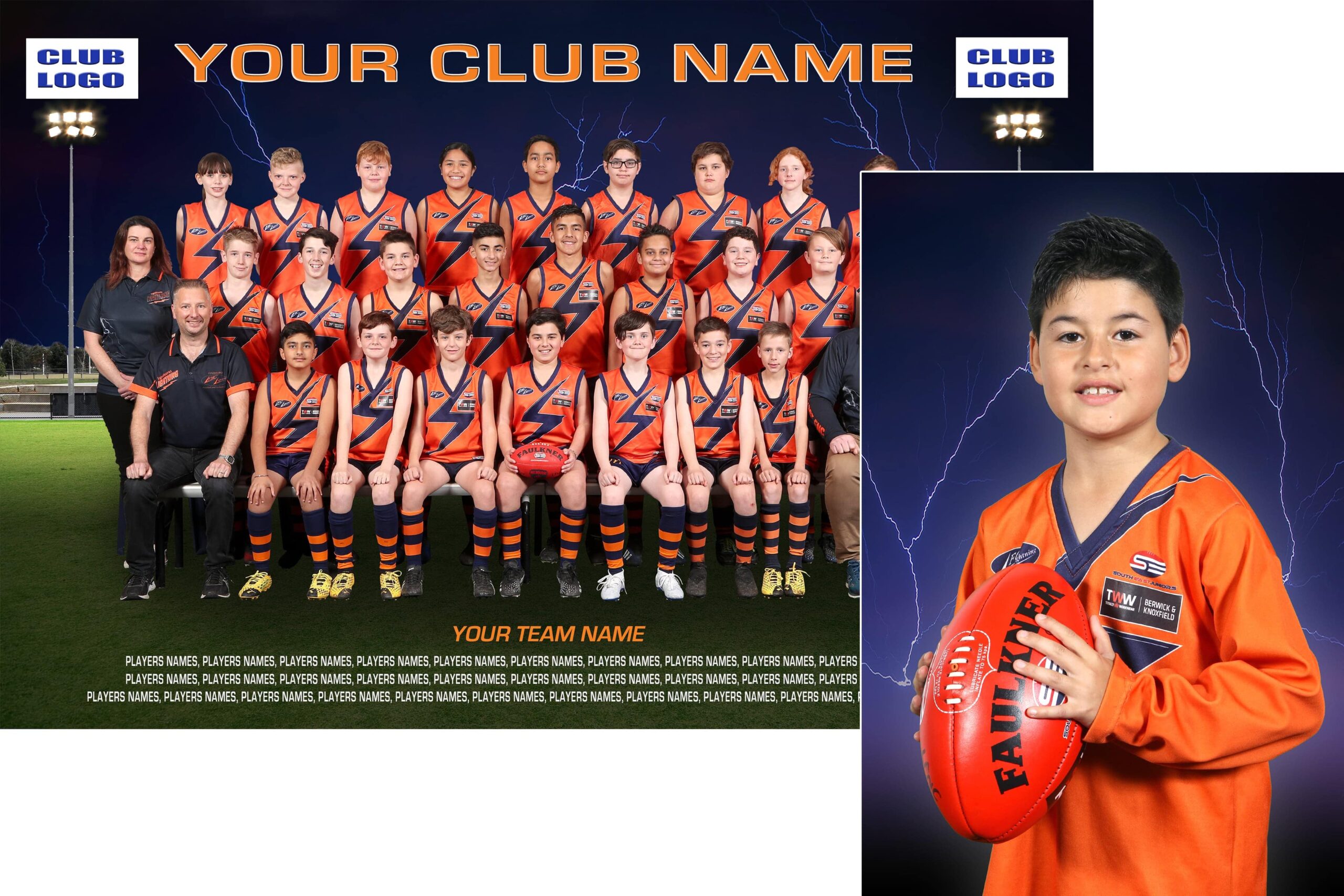
Commercial sports shoots and assignments for local outlets like Pure Sport Images or independent Melbourne sports photographer collectives often impose deliverables: certain crop ratios, a set number of headshots, action sequences, and high-resolution images for large editorial spreads. Plan your lens choices around those outputs. If a client demands hi-res, tight headshots for print, bring a telephoto prime in addition to your action zoom. If the brief prioritises storytelling across the day, the 24-70mm plus 70-200mm combo will cover most needs.
Anecdote: a wet twilight at a suburban oval
On an overcast winter evening at a suburban oval north of Carlton, I had a shoot that taught lesson after lesson. The ground had a thin sheen of rain, the floodlights were uneven, and the opposition organized little more than a resilient slog. I arrived with a 70-200mm f/2.8 on a crop-body and an 85mm f/1.8 for portraits. The 70-200mm at 200mm felt short for the period when play clustered on the far side of the oval, so I switched to a 1.4x teleconverter because the assignment demanded tight faces. Autofocus slowed and the effective aperture dropped, but using spot AF and lowering shutter speed slightly allowed usable frames. The 85mm saved the night for close-up emotional shots because it let me drop to f/1.8 and isolate expressions even under poor lighting. The key takeaway was how versatility and a few fast primes compensated for the lack of ideal glass.
Budget strategies and second-hand market
Top-line f/2.8 telephotos are expensive. If budget is a concern, plan a hierarchy. Buy the 70-200mm f/2.8 first if you need one lens to do most jobs. Add a fast prime like an 85mm f/1.8 for low-light portraits and indoor work. If you mainly shoot stadiums and can manage weight, buy a 300mm f/4 or 400mm f/4 before stepping up to f/2.8 primes. The second-hand market in Melbourne is active. Look for reputable shops and test items thoroughly. Check for fungus in older primes, ensure autofocus is consistent, and ask for sample frames if buying online. A well-kept 400mm f/4 paired with a 1.4x converter can be a very practical and less costly setup.
Practical checklist before a Melbourne shoot
- Check the venue lighting and distance rules. Know where you will stand and whether you can move between ends of the field.
- Pack a versatile primary lens and one fast prime for low light. Bring monopod or straps if you will use heavy glass for long periods.
- Prepare weather protection and cleaning supplies. Melbourne weather changes fast and salt or dirt will damage glass over time.
- Test autofocus on moving objects before the assignment starts. Adjust tracking modes and AF area as required by the sport and your shooting position.
Why experience matters more than the spec sheet
Two photographers with identical lens kits can produce drastically different results. The difference comes from reading play, anticipating frames, and working with the gear's strengths and limits. A 70-200mm f/2.8 produces excellent images when paired with disciplined technique: pre-focusing zones, timing bursts around contact, and using panning to create motion. A 400mm prime shines when you understand the rhythm of a match and position for the crucial exchanges, not when you treat it as a catch-all.
If you are building capability as a sports photographer in Melbourne, start with a lens that fits the events you capture most often. Rent before you buy for specific assignments like the MCG season, an A-league derby at AAMI Park, or a state athletics meet. Renters allow you to test autofocus, weight, and real-world framing without committing to the cost. Over time, your kit will reflect how you shoot: fast and mobile, methodical and long-reach, or narrative-focused with wide glass.
Closing thought without cliches
Choosing lenses for Melbourne sports photography is about matching tools to conditions and workflow. The city's variety rewards photographers who think in trade-offs and adapt to shifting light, venue rules, and client needs. Invest in a versatile zoom, add at least one fast prime, and plan for the ergonomics of a long day. With practice, the right combination of glass and judgment will let you deliver images that feel immediate, accurate, and alive.
Pure Sport Images
23 Grandview Ave, Mulgrave VIC 3170, Australia
+61 413 157 614
[email protected]
Website: https://puresportimages.com.au/